Empower Her, Empower Bangladesh:
The Fight for Women Workers’ Rights
-Farin Binta Zahir, Bangladesh
Without workers, no state or society can progress. The value of labuor is not limited to money; it also encompasses respect for workers, fair wages, safe working conditions, social dignity, and human rights. Proper recognition of labor is essential to building a justified, equitable, and prosperous society. Workers are the driving force of a nation, and in the making of Bangladesh, women workers have always played a pioneering role.
Women constitute nearly 51% of the total population in Bangladesh. According to recent statistics, the rate of female participation in the country’s labor force is 42.7%. However, women continue to face widespread discrimination. For instance, Bangladeshi women spend an average of 6.2 hours per day on household work, while men spend only 1.4 hours. Moreover, nearly 70% of married women experience some form of violence from their husbands, and about 54% face physical or sexual abuse. In addition, women are still denied equal rights in inheritance laws[1].
Women’s contributions in agriculture are also undervalued. According to data from the Department of Agricultural Information Services, 45.7 % of women’s agricultural labor goes unpaid, while the remaining 54.3 % receive wages that are lower than market rates[2].
A survey titled “Technology Upgradation in Bangladesh’s RMG Industry” shows that in 2023, the proportion of female workers in the garment sector fell to 53%, down from 56% in 2014 and far lower than the 80% during the early years of the industry. The owners’ profit from the exploitation of these women workers in garment factories, but neither working conditions nor wages are favorable to them. On the other hand, due to gender inequality, sexual harassment, suppression of voice, unequal pay, and family barriers, women workers are being pushed back in the labor market[3].
According to the Bangladesh Bureau of Statistics (BBS) Labor Force Survey, the number of employed women in 2023 was 24.51 million, which dropped to 22.88 million in 2024. At the same time, the number of women outside the labor force increased from 35.64 million to 38.01 million. In other words, compared to 2023, the number of employed women decreased by about 1.63 million in 2024[4].
Before the COVID-19 pandemic, more than 100,000 women migrated abroad each year for work. However, since 2022, the number has been gradually decreasing. According to the government’s Overseas Employment Platform, about 56,292 women migrated between 1 January and 6 December 2025, which is around a 47% decrease compared to 2022[5]. Although the number of female migrant workers has declined significantly, their economic contribution remains disproportionately high. Typically, migrant women workers earn less than their male counterparts; however, despite these wage disparities, migrant women remit 90% of their income back home, compared to only 50% among men[6].
In other words, the number of working women in Bangladesh is declining at an alarming rate, which is a major setback for both the country’s economy and women’s empowerment. A report titled “The State of Bangladesh’s Economy from a Gender Perspective,” published in May 2025 with the support of UN Women, stated that in the first half of the last fiscal year (July–December), nearly 2.1 million people lost their jobs, of whom about 1.8 million were women, accounting for 85% of all job losses. Currently, only 19% of women are active in the labor market, the lowest in several years[7].
Limited access to safe and reliable transportation significantly restricts women’s mobility and hampers their ability to participate fully in the workforce. In Bangladesh, due to the lack of women-friendly transportation, women, especially at night, experience serious threats to their safety, including harassment. A study shows that approximately 79% of women commuters in Dhaka face sexual harassment in public transport, and one out of every six women experiences harassment daily[8]. These safety concerns create a direct barrier to women’s economic independence, as fear of harassment forces many to limit their job searches to positions within walking distance or to avoid employment requiring evening hours altogether.
The upcoming Fourth Industrial Revolution presents a significant challenge for female workers in Bangladesh, as it accelerates the adoption of automation, artificial intelligence, robotics, and digital technology in the labour market. In the context of Bangladesh, although there has been considerable progress in women’s education, their participation in higher education remains relatively low. For example, in the fields of science, technology, engineering, and mathematics (STEM), women’s representation is still very limited. Among graduates in these disciplines, 79.4% are men, while only 20.6% are women[9]. Women’s participation at the top levels of administration is limited. Only 7.6% of the top-level administrative positions are held by women. At the additional secretary and secretary levels, the proportion is just 1% or even less[10]. These barriers are further reinforced by the fact that 51% of girls in Bangladesh are still married before the age of 18, and the rate of unintended pregnancies is 48%, leading to unsafe abortions that cause many women to face death[11]. Consequently, female workers in Bangladesh face enduring disadvantages and continue to fall behind in economic and social opportunities.
Meanwhile, women who engage in prostitution have no legal recognition, nor is there any clear law regarding prostitution in Bangladesh. Without recognition as workers, they are denied any form of legal aid and protection, instead of becoming victims of police harassment and social discrimination[12].
On November 18, 2024, the interim government of Bangladesh formed the “Women’s Reform Commission” to redefine women’s representation and rights. This commission aimed to review existing discrimination against women in legal, social, economic, and political structures and propose relevant reforms[13]. However, domestic women’s rights and human rights activists argue that even after one year of the interim government, the expectations of women have not been met. Although the Women’s Reform Commission was formed, its report faced criticism, the chairperson and members were disrespected, and there have been no visible initiatives to implement its recommendations. According to them, the decline in the number of working women, along with violence against women and a culture of impunity, has worsened the situation[14].
Achieving equal rights for women in Bangladesh is not only a matter of social justice but also a fundamental human right, recognised internationally. A truly inclusive and sustainable future for Bangladesh depends on safeguarding women’s dignity, ensuring women’s participation in all sectors, and protecting them from exploitation. We must understand that our collective responsibility is to build a society where women workers are not deprived or silenced but empowered as equal partners in shaping the nation’s prosperity.
[1] নারী সংস্কার কমিশনের প্রতিবেদন নিয়ে রাষ্ট্রের দায় কী | প্রথম আলো
[2] Barriers to Ensuring Women’s Land Rights and the Way Forward | The Daily Star
[3] কেমন আছেন বাংলাদেশের নারী শ্রমিকরা?
[4] দেশে উদ্বেগজনক হারে কমেছে নারী কর্মজীবীর সংখ্যা
[5] Skill gaps, abuse and stigma: The untold story behind the drop in Bangladeshi women migrants | The Business Standard
[6] কেমন আছেন বাংলাদেশের নারী শ্রমিকরা?
[7] দেশে উদ্বেগজনক হারে কমেছে নারী কর্মজীবীর সংখ্যা
[8] 79% female commuters in Dhaka experience sexual harassment on public transport: research says | The Daily Star
[9] women reform commission full report-20250504093259.pdf p.97
[10] কর্মক্ষেত্রে নারীর অংশগ্রহণ ও টিকে থাকা | বণিক বার্তা
[11] women reform commission full report-20250504093259.pdf p.14
[12] women reform commission full report-20250504093259.pdf p.132
[13] নারী সংস্কার কমিশনের প্রতিবেদন নিয়ে রাষ্ট্রের দায় কী | প্রথম আলো
[14] দেশে উদ্বেগজনক হারে কমেছে নারী কর্মজীবীর সংখ্যা
[15] Women Farmers Working on a Rural Farm · Free Stock Photo
[16] File:Working conditions of Garment workers in Bangladesh.jpg – Wikimedia Commons
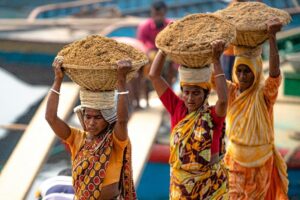
[17] Bangladesh Women Workers Carrying Sand on Head · Free Stock Photo
Fig. 1: Women Farmers Working on a Rural Farm[15].
(Photo: Rakibul Alam Khan / Pexels)
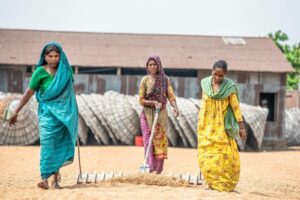
Fig. 2: Working conditions of Garment workers in Bangladesh[16].
(by Fahad Faisal, licensed under CC BY-SA 4.0.)
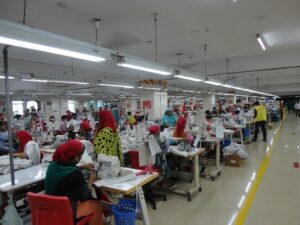
Fig. 3: Bangladesh Women Workers Carrying Sand on Head[17]
(Image courtesy of Rakibul Alam Khan via Pexels)
【Profile】

Ms. Farin Binta Zahir
Ms. Farin Binta Zahir is an educator with over 12 years of experience in teaching and technology. She actively contributes to Bangladesh’s national education initiatives and supports women’s empowerment.
≪33rd KFAW Foreign Correspondent≫
In Pakistan disasters are not just natural—they are deeply social
-Jawaria Arzoo Kashif, Pakistan
Pakistan continues to suffer from a range of climate-induced disasters such as floods, flash floods, landslides, glacial lake outburst floods (GLOFs), and heatwaves. The year 2025 has already witnessed multiple severe events that highlight how disasters disproportionately affect women, girls, and marginalized genders—not just in terms of vulnerability, but in recovery, access to services, and participation in response.
During disasters in Pakistan, women and girls face exacerbated risks including heightened gender-based violence, increased burden of caregiving and household tasks, limited access to resources and humanitarian aid, disrupted reproductive health services, and greater vulnerability to early marriage and trafficking. These issues are driven by pre-existing gender inequalities, displacement, and the breakdown of social infrastructure, making it crucial to implement gender-responsive disaster management strategies to ensure their safety and well-being.
In Pakistan displacement settings and makeshift shelters increase risks of sexual harassment, assault, and exploitation, particularly for girls. Due to their traditional caregiving roles, women are often left to manage households under increasingly precarious conditions, leading to more extensive work in finding food, fuel, and water. Cultural restrictions and poverty, particularly among rural women, limit their access to food, clean water, and essential supplies, including sanitation and hygiene products. Disasters also bring disruptions to health services. Pregnant women, mothers with young children, or those with specific health needs (e.g. chronic conditions) often struggle to reach care during disasters. Overcrowded camps risk spread of disease; menstrual hygiene, maternal care often neglected. Increased poverty and vulnerability during disasters can force families to marry off young girls and women to reduce the financial burden. Girls are often pulled out of school to travel long distances for water, further hindering their development and future opportunities.
The existing social and cultural gender inequalities are amplified during disasters in Pakistan, which shape women’s exposure to risks and their capacity to respond. Economic hardship, exacerbated by disasters, can also lead to exploitation, sexual abuse, and human trafficking.
In many disaster incidents of 2025, more children and women are among the fatalities, often because mobility is restricted (cultural norms), or because they are care‑givers (so less likely to evacuate early). For example, NDMA data[18] during the monsoon reported that out of hundreds of deaths, many were children. While death tolls are reported, gender‑disaggregated figures (women vs men vs children) are less consistently available, making gender‑responsive interventions harder to design. Emergency reports from National Disaster Management Authority (NDMA)[19], Provincial Disaster Management Authority (PDMA)[20] should include breakdowns by gender (male, female, non-binary if data collection allows), age, pregnancy status, disability. This helps tailor action.
During the monsoon season from June to early September 2025, over 4.4 million[21] people have been affected in Punjab alone, with 2.4 million evacuated. In large evacuations, women face issues of privacy, safety in relief camps, access to menstrual hygiene, safe spaces, separate sanitation, etc.
Women are often less represented in formal disaster management bodies or in leadership roles in local response in Pakistan. Disasters incidents in the past and during the flooding events of 2025, there have been observations that emergency planning and local governance in many districts remain male‑dominated, which affects how relief and reconstruction plans address gender‐specific needs.
In flood‑prone districts government must ensure women’s voices are part of local disaster risk committees so that evacuation routes, camp sites, and shelter designs consider safety, privacy, and cultural norms. Relief camps must provide separate sanitation, privacy for women, secure sleeping arrangements, access to menstrual hygiene supplies, reproductive health care, and clean water.
For Pakistan to build resilience that truly protects all, gender must be embedded at every stage: in planning, warning, response, and reconstruction. The year 2025 is an urgent reminder that disasters are not just natural—they are deeply social.
[18] 65 die, 118 injured in rain-related incidents across country – Pakistan – Business Recorder
[19] National Disaster Management Authority (NDMA)
[20] Provincial Disaster Management Authority – PDMA
[21] Rescue operations continue as death toll from floods in Punjab nears 100
【Profile】
Ms. Jawaria Arzoo Kashif
Jawaria A Kashif, Advocate of the High Court, is a Family Law specialist, GBV expert, Legal trainer, Women’s rights activist and a member of the panel of voluntary lawyers at the District Women Protection Centre in Lahore, Pakistan.
≪33rd KFAW Foreign Correspondent≫
On our SNS, we post the latest information, including announcements of Asian Breeze. Please follow us. Click on the icon to jump to the page.