
Asian Breeze 113

Table of Contents
- Toward the Elimination of Violence Against Women
- Special Lecture for the Campaign for Eliminating Violence against Women Hidden Cameras, Hidden Dangers: How to Detect and Prevent Secret Filming
- ネTrapped in the Net: How Sextortion and Voyeurism Silence Bangladeshi Women
Toward the Elimination of Violence Against Women

November 25 each year is the International Day for the Elimination of Violence against Women, as designated by the United Nations. In addition, during the period from November 25 to December 10 (Human Rights Day), the “16 Days of Activism against Gender-Based Violence” campaign, led by UN Women, is carried out worldwide. The theme for 2025 was “UNiTE to End Digital Violence against All Women and Girls.” During this period, campaigns symbolized by the color orange are conducted around the world to raise awareness and encourage action toward ending violence.
In Japan, the government leads the “Campaign for Eliminating Violence against Women,” which is held nationwide each year from November 12 to November 25. During this period, “Purple Light-Up” events are held across the country, in which towers and public facilities are illuminated in purple—since the purple ribbon is the symbol of the movement to eliminate violence against women in Japan. The Kitakyushu Municipal Gender Equality Center “MOVE” also supports this initiative and conducts annual light-up events.
As part of these efforts, the Kitakyushu Forum on Asian Women (KFAW) and the Kitakyushu Municipal Gender Equality Center “MOVE” co-hosted a lecture on November 8, 2025, titled: “Hidden Cameras, Hidden Dangers: How to Detect and Prevent Secret Filming”.
In this newsletter, we report on the contents of this lecture. In addition, we present a report related to gender-based violence by Ms. Farin Binta Zahir, a KFAW foreign correspondent for 2025-2026, on the current situation of sextortion and voyeurism in Bangladesh.
Special Lecture for the Campaign for Eliminating Violence against Women Hidden Cameras, Hidden Dangers: How to Detect and Prevent Secret Filming

At the lecture held on November 8, Ms. Chiharu Yamauchi, Head of Anti-Voyeurism Volunteer Group Wc, an organization working to create a society free from voyeurism in Kitakyushu, was invited as the speaker. In addition to a lecture on the current situation and specific methods used in voyeurism, participants had the opportunity to examine actual hidden cameras and take part in a hands-on workshop where they searched for hidden cameras in a simulated environment set up at the venue. The speaker emphasized the message that “knowledge leads to prevention”, highlighting the importance of having accurate knowledge.
Participants listened to the lecture attentively, and postevent survey responses included comments such as, “I realized my own low level of security awareness,” and “I want to share information about voyeurism, countermeasures, and precautions with my family and friends.” The event provided a meaningful opportunity to raise awareness of how to prevent such crimes.
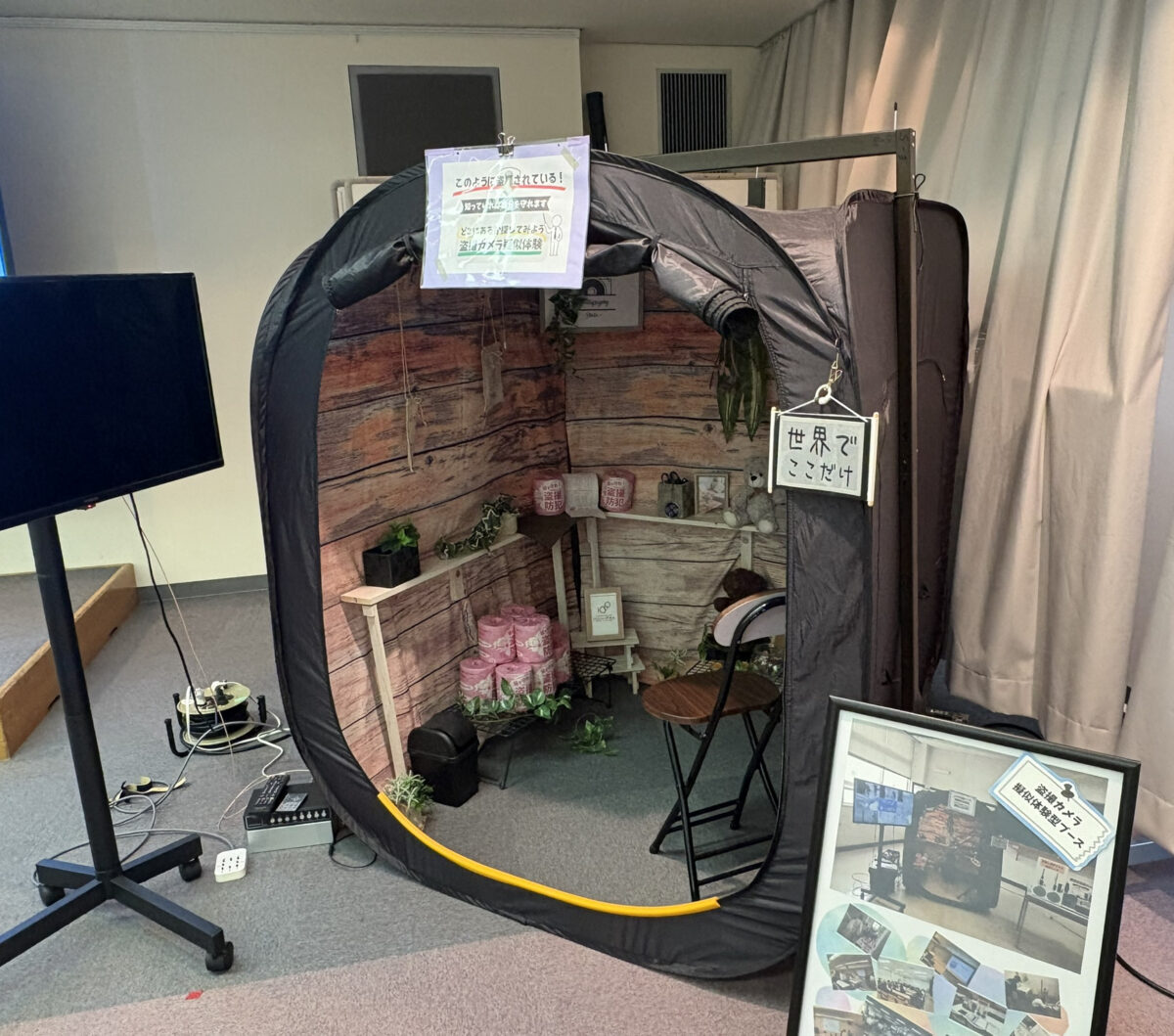
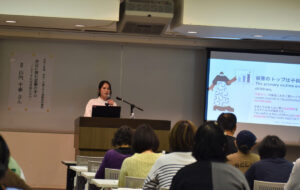
≪Excerpt from Lecture Content≫
Community-Based Efforts to Prevent Voyeurism
Since 2016, Anti-Voyeurism Volunteer Group Wc has been conducting continuous patrols of public restrooms in stations, parks, and other public facilities to check for hidden cameras as well as distributing crime prevention stickers.

“Voyeurism” refers to the act of secretlyphotographing or recording someone without their awareness. It is also referred to as “secret filming” or “hidden recording.” It is a malicious act that ignores the subject’s consent and is a form of sexual violence affecting individuals of all ages and genders. However, because it is a non-contact offense, there remains a lack of recognition of it as a sexual crime.
Technological Advances and the Intensification of Harm

In recent years, advances in technology have made cameras used for voyeurism more sophisticated and smaller, and they can be easily obtained online. There are devices disguised as clocks, glasses, screws, and mobile batteries, making hidden cameras difficult to detect at a glance. Images and videos obtained through such acts are traded online, with the market said to be worth tens of billions of yen.
There was a case where a high school student who initially filmed for amusement escalated to selling such content after realizing its high market value. Furthermore, once such images or videos are distributed online, it becomes extremely difficult to completely remove them, causing long-term suffering to victims as a form of “digital tattoo.”

Toward a Society without Perpetrators or Victims
To prevent voyeurism, sex education and ethical education for children are essential. Cultivating the ability to understand how one’s actions affect others is key to building a society that does not produce perpetrators. At the same
time, facility managers are expected to create environments in workplaces, schools, and public spaces that make it difficult to install hidden cameras. Additionally, each adult should remain aware of their surroundings when using facilities such as restrooms and check for suspicious devices. These actions not only protect oneself but also help protect others.

In Japan, the “Act on Punishment for Nonconsensual recording of Sexual Acts/States” (commonly known as the “filming offence”) was newly enacted in 2023, and the number of arrests related to voyeurism has been increasing. Voyeurism is a crime that can be prevented through awareness — “knowledge leads to prevention.” By correctly understanding voyeurism and raising awareness in everyday life, such crimes can be prevented.
The importance of collaborative efforts among communities, businesses, and government, along with public awareness activities, is becoming ever more significant in creating a society free from both victims and perpetrators.
Trapped in the Net: How Sextortion and
Voyeurism Silence Bangladeshi Women

Profile
Ms. Farin Binta Zahir is an educator with over 12 years of experience in teaching and technology. She actively contributes to Bangladesh’s national education initiatives and supports women’s empowerment.
In Bangladesh, topics related to sex and sexuality remain strong social taboos[1]. Due to this taboo, cybercrimes like sextortion and voyeurism are repeatedly occurring in Bangladesh. Based on data from the Bangladesh Telecommunication Regulatory Commission (BTRC), the country’s internet subscribers reached 128.99 million in January 2026. It is creating more opportunities for such crimes. One reason behind this is, of course, gender inequality. According to the Bangladesh police, 70% of cyber-crime victims are females aged 15–25, as well as minors under the age of 18, while most perpetrators are young men aged 17–25.
Teenagers are often the easiest targets for cybercrimes. In Bangladesh, average teenagers try to hide their relationships from their parents, so they depend on the internet to share private photos or send sexual messages. This makes them vulnerable and creates a situation where they can easily be targeted. As a result, crimes like “sextortion” become more common. Sextortion is a criminal threat to share a victim’s private photos or messages unless the victim gives them money or meets their demand[2].
Unfortunately, sometimes a boyfriend, husband, or partner shares a woman’s intimate images or videos online to assert power or control over her through the misuse of technology. The damage does not end online; it lasts for a lifetime. It travels into every part of their lives brutally, their personal life, their family life, and their social life. Some even face serious financial losses. A 2021–2022 study found that exboyfriends were behind one-third of cyber violence incidents involving women. Another 20% stemmed from digital ‘friendships’. Victims do not understand when trust is turning into a trap. This type of crime doesn’t only happen to less educated or illiterate people. A high-profile case in Bangladesh shows this clearly. Private videos of a Bangladeshi actress were leaked by her former fiancé. She faced scrutiny, mockery, and moral judgment, while the man who betrayed her faced little or no backlash. Society has not yet caught up with technology when it comes to fairly judging women [3].
Nowadays, many women are becoming victims of different types of cybercrime, including blackmail and sexual exploitation, through videos recorded in trial rooms or other private spaces. This type of crime is known as voyeurism. Common examples of voyeurism include peeping through windows, using hidden cameras, watching private activities, using mirrors or reflections, hacking webcams, taking pictures from an unwanted angle, and looking through keyholes. Most of the time victims are unaware that they were being recorded or captured. Voyeurism is not only committed due to a perverted mentality or as an act of revenge. Today, it has become a commercial activity, traded online in a market worth tens of billions of dollars, showing how widespread and profitable this form of exploitation has become. The increasing accessibility of advanced technologies such as deep fakes and artificial intelligence is also contributing to the rise in these types of crimes.
Dhaka has large outlets and renowned beauty salons located in areas such as Gulshan, Banani, Mirpur, Uttara, and Dhanmondi. Earlier in 2011, the well-known beauty salon faced widespread criticism for placing CCTV cameras in its Banani branch’s changing room[4]. A similar incident occurred in 2016 at an upscale beauty parlor in Uttara, where private moments of clients receiving services were being recorded on CCTV cameras without their knowledge.
Although the salon owner initially claimed that the cameras installed in various rooms, including the common areas, were ‘spotlights,’ they later admitted that they were “cameras”, but claimed that they were “inactive.” When questioned further, they said, “The footage from these cameras is kept by salon staff, so there is nothing to be alarmed about” [5]. In a 2023 interview with The Daily Star, a 36‑year‑old service holder woman said she had visited a particular branch of a beauty salon several times and was shocked to discover that cameras had been installed in several rooms.
This is especially alarming because the High Court had already ordered the removal of CCTV cameras from the service rooms of all beauty parlours across the country back in 2011[6]. In 2025, a similar incident came to light again. There were allegations that women were being filmed in an inappropriate way inside the trial room of a clothing store in Uttara, Dhaka. A well-known television actor of Bangladesh raised the issue publicly and expressed strong outrage on his social media[7]. In January 2026, the police detained a male intern doctor following allegations that a hidden camera had been installed in a washroom used by female doctors at a medical college hospital[8]. Usually, due to the widespread culture of victim-blaming, most of the victims or victims’ families do not seek help from the police or take any legal steps.
Several organizations in Bangladesh work actively to combat cybercrime, strengthen cybersecurity, and support victims of online abuse. Government agencies play the leading role, including the National Helpline (999), CT-Cyber Crime Investigation Unit of DMP, the Cyber Police Center, and CID’s Cyber & Special Crime Division, and the Cyber Support for Women & Children Desk, which focuses on helping women and minors facing online harassment. At the national level, the Bangladesh e-Gov CIRT, the Digital Security Agency, and the newly added National Cyber Security Agency (NCSA) handle incident response, and nationwide reporting[9]. Alongside these, several civil society organizations contribute to awareness, prevention, and legal support, such as BLAST, the Cyber Crime Awareness Foundation, Naripokkho, BRAC, Cyber Teens, and other digital rights groups.
Usually, once pictures or videos are leaked online, they can never truly be erased. For a proper mechanism to protect victims, staff working in government agencies need better training to handle cybercrime cases, especially because many victims do not know how to take their first steps or where to seek help. Also, for the safety of women, the government should work with international tech companies to develop an affordable and easy-to-use device that can help detect hidden cameras.
Between 2014 and 2022, Dhaka’s cyber tribunal gave verdicts in just over 200 cases out of more than 2,000 filed. That means the conviction rate was less than 10%. Some cases take years to finish, while others disappear quietly without resolution[10]. Behind the reason is that the legal system is excessively slow in Bangladesh. Police can only carry out digital forensics only after filing a GD or an FIR[11].
In Bangladesh, several laws, such as the Women and Children Repression Prevention Act (2000), the ICT Act (2006), the Telecommunication Act (2001), the Pornography Control Act (2012), and the Cyber Security Act (2023), can be used to punish cybercrimes and some types of online harassment. But these laws are still not enough to deal with gender-based online violence, especially sexual harassment on social media. Their impact is also weakened by problems like corruption and the influence of powerful people. Even though a Cybercrime Tribunal exists, about 90% of cases are never reported, which shows how difficult it is for victims to get justice[12].
There is another serious risk: in some sextortion cases, victims may be punished in court for the very actions that were used to exploit them. Specifically, reporting their sextortion can reveal that they shared intimate images with their partners, which is prohibited in Bangladesh[13]. Overall, these laws alone are not enough to protect victims or address the growing problem of online gender-based violence. Collective action and increased awareness are essential to effectively combat this issue.
Cybercrimes like sextortion and voyeurism are growing threats in Bangladesh, and the existing legal and institutional systems are not strong enough to fully protect victims. Although several government agencies and non-government organizations are working to address online abuse, many cases still go unreported due to fear, stigma, and lack of awareness. Hidden cameras in trial rooms, unauthorized surveillance in beauty parlors, and the misuse of digital platforms show how vulnerable women and girls remain in everyday spaces. Detectable devices, strengthening legal frameworks, improving reporting channels, and ensuring proper training for all frontline staff are essential steps. Most importantly, society must break the silence surrounding digital sexual harassment so that victims feel safe to seek help and justice. Only through stronger laws, better enforcement, and collective awareness can Bangladesh effectively combat these crimes and create a safer online environment for everyone.
[1] Online sexual extortion: Why can’t we protect the most vulnerable?│The Daily Star
[2] Ibid
[3] Cyber Violence Is Silencing Women in Bangladesh│South
Asia Monitor
[4] CCTV in Women’s World raise safety concerns│The Daily
Star
[5] িবউটি পাল
[6] Ibid
[7] ট্রায়াল রুমে ক্যামেরা বসিয়ে গোপনে করা হতো নারীদের ভিডিও: ইরফান সাজ্জাদ
[8] Intern detained over hidden camera in female doctors’
washroom│The Daily Star
[9] The National Cyber Security Agency (NCSA) has introduced around-the-clock helpline service to provide swift assistance to the public in combating cyber crimes│Dhaka Stream
[10] Ibid
[11] Ibid
[12] Invasion of privacy: Sharing Non-Consensual image and
Video Peddling in Bangladesh
অনলাইেন অন্তরঙ্গ ছিব প্রকাশ িনেরােধ আইন চাই
[13] Ibid