
How Border Conflicts Affect Cambodian Women and Girls
-Visalsokwatey Sin, Cambodia
The conflict between Thailand and Cambodia took a troubling turn when barbed wire was installed at the Ta Moan Thom temple in Cambodia on June 24, 2025. This escalating tension has come at a significant human cost, particularly affecting Cambodian women and girls (Rin, 2025[1]). While discussions often focus on political or military aspects, it is crucial to remember that these conflicts don’t just alter borders; they disrupt lives and deepen existing inequalities, especially for some of the most marginalized members of society.
Displacement and Heightened Vulnerabilities
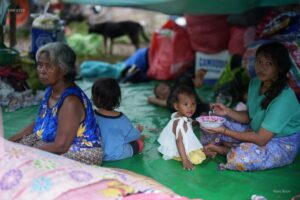
As tensions rise, families are forced to flee their homes, with women and children bearing the brunt of this upheaval. Living in makeshift shelters introduces a host of new dangers. Access to basic necessities like clean water and proper sanitation becomes a major concern. Without safe, sex-segregated facilities, women and girls face heightened risks of harassment and assault. For many, especially those who menstruate, the lack of privacy and hygiene can severely impact their daily lives. Despite the tireless efforts of humanitarian organizations to provide essential items like hygiene kits, the overwhelming demand continues to outstrip supply.
Economic Bankruptcy and Lost Livelihoods
The financial strain of the conflict falls heavily on women. Local economies have suffered greatly due to closed borders and disrupted trade routes, hitting small-scale entrepreneurs -many of whom are women- particularly hard. Often the primary breadwinners for their families, these women find themselves without work, driving their families deeper into poverty. With limited options, some may resort to dangerous jobs in search of income, exposing themselves to even greater risks of exploitation. This precarious situation forces them to rely on others, leaving them feeling increasingly vulnerable and insecure.
Psychological Trauma and Disrupted Futures
The impact of conflict extends beyond physical hardships; it inflicts deep psychological scars on women and girls. Living in constant fear and witnessing violence can lead to serious, long-lasting mental health issues. Schools may be destroyed or repurposed for shelter, disrupting education for children, especially girls, who risk being sidelined in their futures. This instability can severely affect emotional development, particularly for young children, whose growth is so delicate and vulnerable.
Greater Risks of Violence and Exploitation
In regions marked by unrest, the risk of gender-based violence and exploitation skyrockets. The breakdown of social structures, combined with a volatile environment, places women and girls in precarious situations where they are at an elevated risk of trafficking, violence, and early marriages. With their traditional support networks dismantled, these individuals become easy targets for those looking to exploit their vulnerabilities. While initiatives to create safe spaces and raise awareness are vital, the fluid nature of these conflicts makes it challenging to ensure their protection.
A Call for Awareness and Activism
There is an urgent need to address the human impact of the Thailand-Cambodia border conflict, particularly concerning women and girls. This situation highlights how geopolitical struggles can reverberate through communities, causing pain for those least equipped to defend themselves. Acknowledging these gender-specific impacts is the first step toward advocating for broader, gender-responsive humanitarian efforts and fostering lasting peace that truly protects and empowers all members of society.
[1] Cambodianess: Safe Spaces Help Heal Women and Children Displaced by Border Clashes
Picture 1: Women and children are living in the shelter to escape from the clash between Thailand-Cambodia in Oddarmeanchey Province, Cambodia. Photo taken by Soun Ravy. (Soun, 2025)
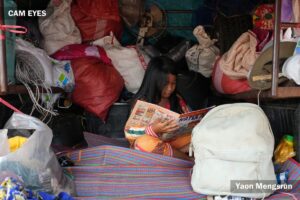
Picture 2: Aside from seeking peace, the girl is still seeking education in the shelter.Photo taken by Mr. Yaon Mengsrun.(Yaon,2025)

【Profile】
Sin Visalsokwatey
Sin Visalsokwatey works for the Ministry of Women’s Affairs in Cambodia. Her passion lies in conducting research and producing publications, particularly in the realm of Gender Equality, which continues to be a significant world’s concern.
A Nation at the Crossroads:
Gender-Based Violence Trends in Bangladesh Before and After August 2024
-Farin Binta Zahir, Bangladesh
Gender-based violence is a critical issue in Bangladesh. It is deeply rooted due to social, cultural, and economic inequalities. For decades, Bangladeshi women have faced physical, emotional, and sexual violence. In recent years, cyber violence has become an additional threat. Nowadays, it is increasing at a geometric rate. As Bangladesh continues its journey of modernization, political and social reform, it remains a significant obstacle to achieving true gender equality.
August 2024 was a crucial period and a turning point for Bangladesh, as the country experienced significant political turmoil marked by widespread protests, known as the Student Movement Against Discrimination. It imposed emergency actions like a curfew in many areas. These events disrupted daily life, strained public institutions, and created an atmosphere of fear and uncertainty. Law enforcement agencies were overwhelmed, resulting in a breakdown of protection mechanisms for ordinary people. Consequently, women and children are particularly at risk of instability and reduced access to legal services.
According to the 2024 Violence Against Women Survey, conducted by the Bangladesh Bureau of Statistics and United Nations Population Fund, approximately 70% of women reported experiencing some form of intimate partner violence in their lifetime[1], including physical, sexual, emotional, financial, and cyber abuse. In the 12 months preceding the survey, 41% of women reported facing intimate partner violence, indicating a decline from 55% in 2015[2]. Young married women aged 15–19 are particularly vulnerable, with over 62% reporting intimate partner violence in the past year. The survey also revealed that 75.9% of women had experienced violence at least once in their lives. Rural areas report almost the same rates (76%) compared to urban areas (75.6%)[3].
On the other hand, violence against women has increased due to the political changeover on August 5, 2024, in Bangladesh. Women and children became extremely vulnerable by facing heightened exposure to violence, displacement, economic insecurity, and reduced access to essential services such as law enforcement, healthcare, education, and legal justice. Between August 2024 and January 2025, at least 8,307 cases were filed, including 2,016 rape cases[4]. Additionally, the national emergency helpline 999 received 8,935 calls reporting incidents of violence against women and girls between August 2024 and February 2025. It was more apparent that monthly reports indicated fluctuations in violence cases[5]. For example, there was a 27% increase in reported violence against women and children in September 2024 compared to August 2024, where incidents rose from 147 to 186[6]. Rape cases increased from 8 to 13, and gang rape cases rose from 7 to 11. That same month, 49 women and girls were murdered for various reasons. In January 2025, 205 women and girls faced various forms of violence, including 67 rape cases, 20 of which were gang rapes[7].
Specific regions experienced a significant amount of increase in domestic violence. In Rajshahi, it was evident that reported cases tripled in 2024 compared to the previous year, where 299 women were subjected to domestic violence[8]. In Bangla-desh, women in disaster-prone areas are at higher risk. In particular, 81% of women experienced intimate partner violence in their lifetime, rather to 74% in non-disaster regions[9]. A significant 64% of survivors of physical or sexual violence never disclosed their experiences to anyone due to social norms and harassment in Bangladesh[10].
In March 2025, the specific tragic case of an eight-year-old girl in Magura, who was raped and later died, gathered national and international attention[11]. In addition to that, cybercrime is now a new weapon in the field of gender-based violence[12]. Social media stands out as the leading platform for cybercrime, and most of the victims are between the ages of 18-30. Estimates suggest that around 72% to 80% of cybercrime victims are female, depending on the source[13]. Moreover, sextortion has added a new dimension to it. According to the information provided by the Bangladesh Women Lawyers Council, an average of 11 women try to commit suicide every year due to cybercrime[14].
While efforts have been made to address gender-based violence in Bangladesh, the period following August 2024 has seen a concerning growth in reported cases. Political transitions, economic challenges, and social norms have played a vital role in the recent rise in gender-based violence. Combating it requires legal reform, community action, and strong support services to protect and empower women.
[2] UNFPA in Bangladesh: VIOLENCE AGAINST WOMEN SURVEY BANGLADESH 2024
[3] Ibid.
[4] Ibid.
[5] NEWAGE: End to violence against women in Bangladesh not in sight
[6] Ibid.
[7] The Daily Star: Violence against women jumps by 27pc in September
[7] The Daily Star: 205 women, girls faced violence in January
[8] NEWAGE: Domestic violence against women on rise in Rajshahi
[9] UNFPA: VIOLENCE AGAINST WOMEN SURVEY BANGLADESH 2024
[10] Ibid.
[11] The Dairy Star: Magura rape victim suffers two more cardiac arrests today
[12] Prothom Alo ENGLISH: Women ‘easy targets’ in cyberspace too
[13] Daily Sun: Women major victims of cybercrimes
The Daily Star: 80% of cyberbullying victims are women: Cyber Crime Division of DMP
[14] GENDERIT.ORG: Cyber violence against women: the case of Bangladesh

【Profile】
Ms. Sin Visalsokwatey works for the Ministry of Women’s Affairs in Cambodia. Her passion lies in conducting research and producing publications, particularly in the realm of Gender Equality, which continues to be a significant world’s concern.33rd KFAW Foreign Correspondent.
On our SNS, we post the latest information, including announcements of Asian Breeze. Please follow us.
Click on the icon to jump to the page.