Women Economic Empowerment in Pakistan: Challenges and Progress
-Jawaria Arzoo Kashif, Pakistan
Economic empowerment is crucial for women to achieve independence and contribute actively to society. Women’s empowerment in Pakistan is a dynamic process marked by progress and challenges. Deep-rooted societal norms, gender-based violence, low labor force participation, gender gap in property ₁ ownership, social and cultural barriers, limited access to resources and economic disparities are the challenges which continue to hinder the full realization of women’s empowerment in Pakistan but there has been a remarkable shift in societal attitudes, policies, and initiatives aimed at fostering gender equality and empowering women across various sectors in Pakistan.
Women’s access to education, skills training, and childcare can help increase their participation in the labor force. Equal access to property ownership is vital for women’s economic security and empowerment. Likewise access to microfinance, technology, and market opportunities allows women to develop and grow their businesses.
Over the years, Pakistan’s government has made efforts to integrate gender equality into its national policy framework. Notable steps include the National Policy for Women’s Empowerment (2002), the establishment of the National Commission on the Status of Women (NCSW ₂ ), Women Development Departments (WDD), implementing quotas for women in various sectors and creating programs like the Benazir Income Support Program (BISP), National Rural Support Program (NRSP) and Rural Support Program Network (RSPN) is empowering economically marginalized women by providing direct financial assistance.
Women’s participation in the workforce has increased, particularly in urban areas and certain sectors such as banking, education, and healthcare. Microfinance programs by Alkhidmat ₃ Foundation Pakistan like interest free loans for women or orphan’s mother for the establishment of small businesses (e.g., tailoring, food processing), fostering self-reliance and confidence, starting new or expanding the businesses and vocational training initiatives have provided women with opportunities to start their own businesses and gain financial independence. Likewise, Kashf ₄ Foundation is providing financial services to low-income women entrepreneurs in Pakistan. Through microloans, business training, and mentorship, Kashf has empowered thousands of women to start and expand their businesses, improving their economic status and social standing.
Government of Pakistan and its provinces have introduced numerous digital, technical and vocational learning programs e.g., Punjab Skills Development Fund (PSDF ₅ ), Digi Skills ₆ , Punjab Vocational Training Council (PVTC), Technical Education and Vocational Training Authority (TEVTA), National Vocational and Technical Training Commission (NAVTTC). More girls and women are getting benefit from these programs.
Despite progress, cultural stigmas and gender biases persist. Traveling has always been a challenge for women in Pakistan. The emergence of female scooter riders and bike drivers represents a significant shift in how women navigate their lives, signaling a need for supportive policies to sustain this momentum. Programs like Women on Wheels ₇ by Salman Sufi Foundation with the collaboration of government of Punjab, which train women to ride bikes, are a step in the right direction.
On the other hand, gender-responsive laws and policies paved the way towards economic empowerment of women in Pakistan. Enactment of the Provincial Home-Based Worker Laws, the Provincial Persons with Disabilities Act, and regulations relating to protection against workplace harassment, Enforcement of women property rights act are few examples of important legislations. Domestic Violence Acts in Sindh and Baluchistan providing legal protections against domestic abuse. Punjab Protection of Women against violence Act covers domestic violence, emotional abuse and cyberbullying. Laws against acid attacks and honor killings are also enacted. However, implementation and enforcement remain key challenges, often due to cultural resistance and institutional barriers. The most recent incident in Baluchistan ₈ province is an example of Pakistan’s deep-rooted patriarchy and distorted notions of honor. Efforts to strengthen the legal framework and improve access to justice are ongoing.
Women’s representation in politics has increased through quota systems ensuring their presence in local government bodies and the national parliament. Despite this progress, women continue to face obstacles in accessing leadership roles and participating fully in decision-making processes.
Nevertheless, the resilience, determination, and achievements of Pakistani women, alongside the efforts of civil society organizations, activists, and policymakers, offer hope for transformative change. By fostering a conducive environment that supports women’s rights, empowers them economically and politically, and challenges gender norms (i.e., gender roles, patriarchy, honor and family, wearing veil, influence on family life and cultural and religious influences etc.) Pakistan can unlock the full potential of its female population and build a more inclusive and prosperous society for all.
1 Unlocking Women’s Economic Empowerment: Revisiting Tax and Property Reform in Khyber Pakhtunkhwa
https://blogs.worldbank.org (Accessed 24 July, 2025)
2 National Commission on the Status of Women
https://ncsw.gov.pk/
3 How Alkhidmat Empowering Women in 2025 through Islamic Microfinance Solutions
https://alkhidmat.org (Accessed 24 July, 2025)
4 Kashf Foundation
https://kashf.org/financial-products/
5 PSDF
https://www.psdf.org.pk/empowering-rural-women/
6 DigiSkills Training Program | Free online training in Pakistan
https://digiskills.pk/
7 Women on Wheels – WOW
https://salmansufifoundation.org/wow/
8 Sheetal and Zark: Love, Blood, and Pakistan’s Twisted Patriarchy
https://www.aiknewshd.tv/2507210007-sheetal-and-zark-love-blood-and-pakistans-twisted-patriarchy-(Accessed 24 July, 2025)
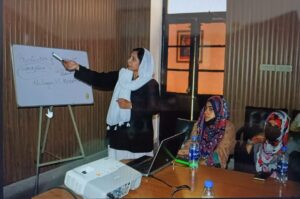
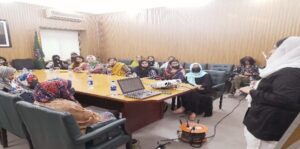
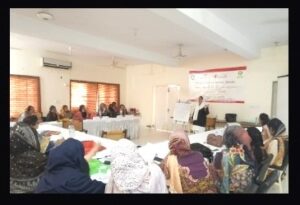
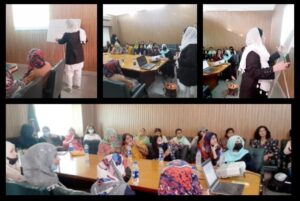
Ms. Jawaria Arzoo Kashif is delivering a lecture to women/girls bike riders on Anti-Harassment Laws of Pakistan under a project Women on Wheels (WOW)- Punjab
【Profile】
Jawaria A Kashif
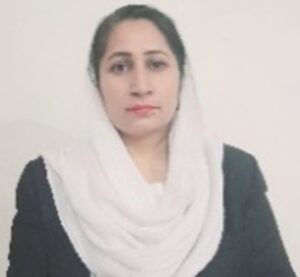
Advocate of the High Court, is a Family Law specialist, GBV expert, Legal trainer, Women’s rights activist and a member of the panel of voluntary lawyers at the District Women Protection Centre in Lahore, Pakistan.33rd KFAW Foreign Correspondent.
Progress of Government’s Policy on Gender Equality in Cambodia
-Visalsokwatey Sin, Cambodia
Development of Gender Equality Policy in the Cambodian Government, which has emerged from a traumatic past[1], has made great strides toward furthering gender equality through a succession of focused government policies and programs. Despite surviving cultural norms[2] and socioeconomic problems, the Royal Government of Cambodia has been increasingly committed to strengthening women’s rights and incorporating gender-based perspectives into the nation’s overall program of development. This article looks at the current situation in Cambodia, challenges, and suggestions to address the issue.
Historically, women in Cambodian culture, like many others in the region, have been restricted to household duties. Nevertheless, since the early 2000s, efforts have been made to address these problems. The Cambodian Constitution (in force since 1993) specifically outlawed discrimination against women, forming a legal basis for gender equality (RGC, 1993). Cambodia’s constitutional commitment has been augmented by its accession to international human rights treaties, especially the Convention on the Elimination of All Forms of Discrimination Against Women (CEDAW). The five-year framework of the Neary Rattanak strategy plan (Women are Precious Gems) has undergone several revisions since its inception. The latest annual plan, Neary Rattanak VI (2024-2028), is designed to integrate gender equality and empower women within all state institutions, sectoral policies, and programs (MoWA, 2024). It will focus on challenges like raising people’s living standards, enhancing access to education, health care, legal protection, and governance, and promoting climate change understanding. The Ministry of Women’s Affairs (MoWA) plays a vital role in leading, coordinating, and overseeing programs like these; the Prime Minister held annual assessment meetings to ensure that they made good on their national commitments.
Cambodia has made significant progress in gender equality and education, particularly in primary schools, where girls have higher attendance rates. Authorities have sought to eliminate gender disparities in education and vocational training, enabling women to acquire skills for better-paying sectors of the economy. However, there are still areas where equal treatment is needed, such as improving access to contraception in remote areas.
Economic empowerment has seen serious development in recent years, with policies aimed at boosting women’s participation in the job market, increasing access to financial services, and fostering entrepreneurship. The National Strategy for Informal Economic Development 2023–2028 aims to broaden the informal economy and help women transition to formal employment through voluntary social insurance and incorporation systems. (RGC, 2023).
Despite the progress, significant barriers remain, including deep-rooted cultural norms and stereotypes, discriminatory attitudes, implementation shortcomings, regulatory difficulties, and glass ceilings in leadership and politics (UN, 2022). Women are represented to a lesser extent in important decision-making positions, living in the informal labor market, or stuck as migrant workers. In conclusion, Cambodia has made significant strides in promoting gender equality and empowering women, but more work is needed to overcome the existing barriers and ensure equal opportunities for all women.
In summary, Cambodia’s government shows a clear, evolving commitment to gender equality through its policy frameworks, notably the Neary Rattanak strategic plans and National Action Plans on Violence Against Women. There has been progress in education, health, and economic empowerment; the state has even initiated visible efforts to improve women’s political role and prevent gender-based violence. However, achieving complete gender equality requires ongoing efforts to undo prevailing social practices, improve enforcement of policy, and ensure that all Cambodian women and girls have equivalent opportunities. The government’s dedication and cooperation with domestic NGOs and international partners, will be key to address the remaining challenges and enhance the society which serves everyone equally.
11 Traumatic Past: This refers to the period when the Khmer Rouge Regime ruled in Cambodia from 1975 to 1979, and it affected individuals, families, and the nation as a whole. The regime was responsible for the deaths of approximately 1.5 to 3 million people (about one-quarter of the population) due to execution, starvation, illness, and forced labor. This led to deep and extensive mourning and sorrow, with numerous families suffering the loss of several relatives.
12 Cultural Norms: These refer to the behaviors, beliefs, values, and customs that are widely accepted and practiced in the society. Women are expected to be soft-spoken, gentle, and modest in their demeanor. Their primary role is seen as maintaining the household, caring for children and elders, and managing finances within the home. For example, in Cambodia, it was commonly believed that women should stay at home and perform household duties, while men were sent to school.
References:
・The Ministry of Women’s Affair (MoWA). (2024). Neary Rattanak VI. The Ministry of Women’s Affairs.
https://www.mowa.gov.kh/en/nearyrattanakenvi
https://asset.cambodia.gov.kh/mowa/2024/08/NR6-English-V10_Web.pdf
・The Ministry of Women’s Affair (MoWA). (2019). The National Action Plan to Prevent Violence Against Women (NAPVAW) 2019-2023. The Ministry of Women’s Affairs.
https://www.mowa.gov.kh/en/national-plan-to-prevent-violence-against-women-2019-2023-en
・The Royal Government of Cambodia (RGC). (1993). The Cambodia’s Constitution Law.
・The Royal Government of Cambodia (RGC). (2023). National Strategy for Informal Economy Development 2023-2028. Digital Platform for Informal Economy Development.
https://cdn.misti.gov.kh/documents/202502051007038bjzgpqRQ7Gj.pdf
・The United Nation (UN). (2022). Gender Equality Deep-Dive for Cambodia. United Nation Cambodia.
Picture 1:Official Launching Standard of Operation of the One-Stop Services United for Survivors of Gender-Based Violence (MoWA, 2024)
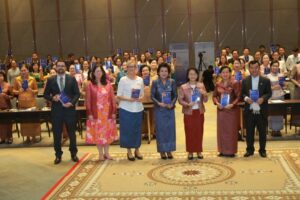
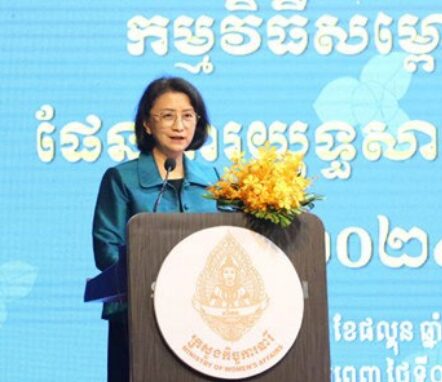
Picture 2:The Launching Event for Neary Rattanak Strategy VI (2024-2028). (MoWA, 2024)

【Profile】
Ms. Sin Visalsokwatey works for the Ministry of Women’s Affairs in Cambodia. Her passion lies in conducting research and producing publications, particularly in the realm of Gender Equality, which continues to be a significant world’s concern.33rd KFAW Foreign Correspondent.
Click on the icon to jump to the page.